
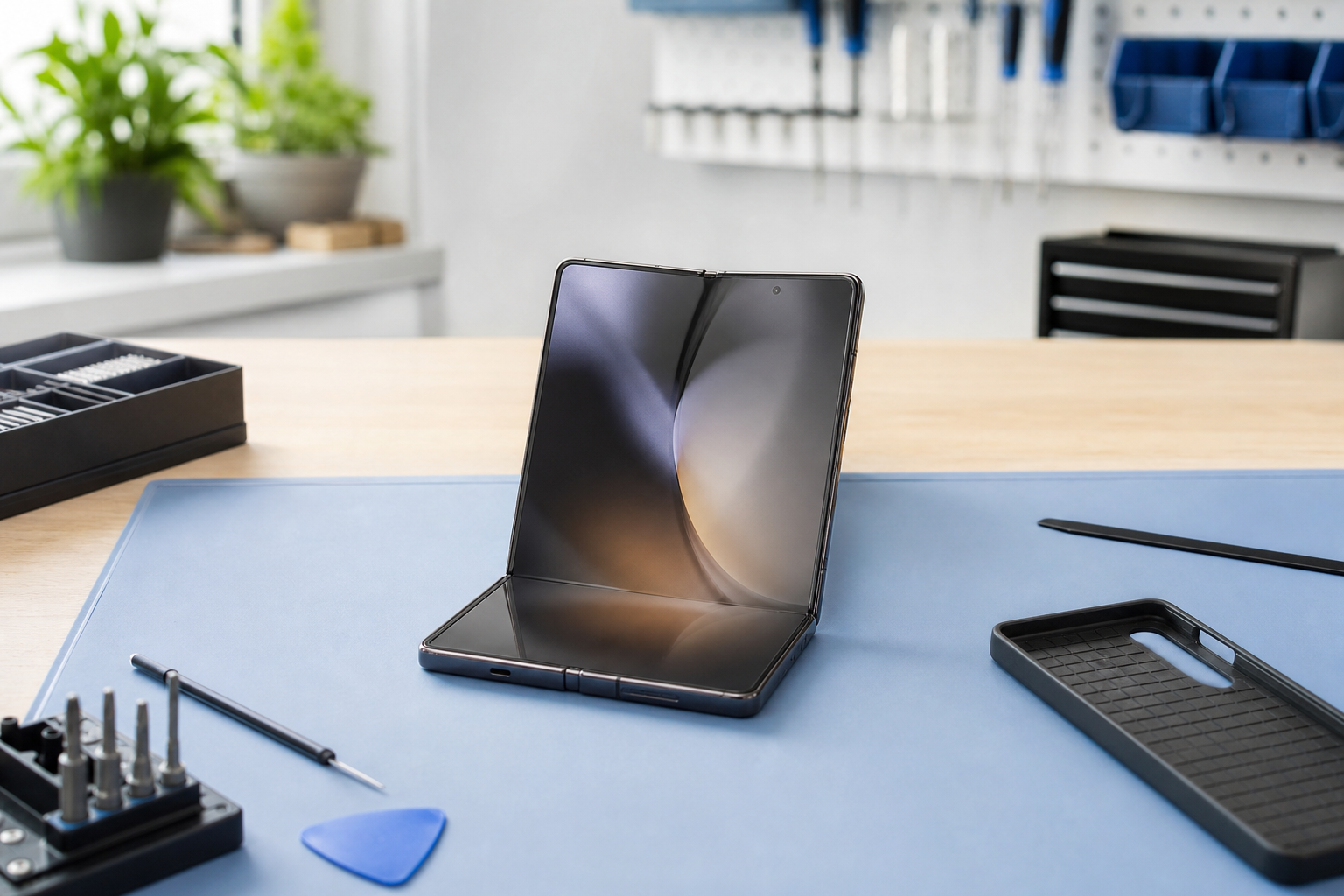
Apple has unveiled the iPhone Duo, its first foldable iPhone. In the UK, pre-orders are scheduled to open on 16 October 2026, with availability from 23 October 2026. Apple says the phone has a 7.6-inch inner display, a 5.4-inch outer display, a precision hinge and IP68 water and dust resistance. (apple.com)
A foldable phone offers a different experience from a conventional iPhone, but it also needs slightly different care. The inner display, hinge and protective layers all work together, so a small amount of dirt, pressure or unsuitable cleaning can potentially cause more trouble than it would on a standard flat phone.
This guide explains what iPhone Duo owners should know about iPhone Duo foldable screen protection in the UK, including cases, cleaning, hinge care and when to seek professional advice.
Why foldable phones need extra care
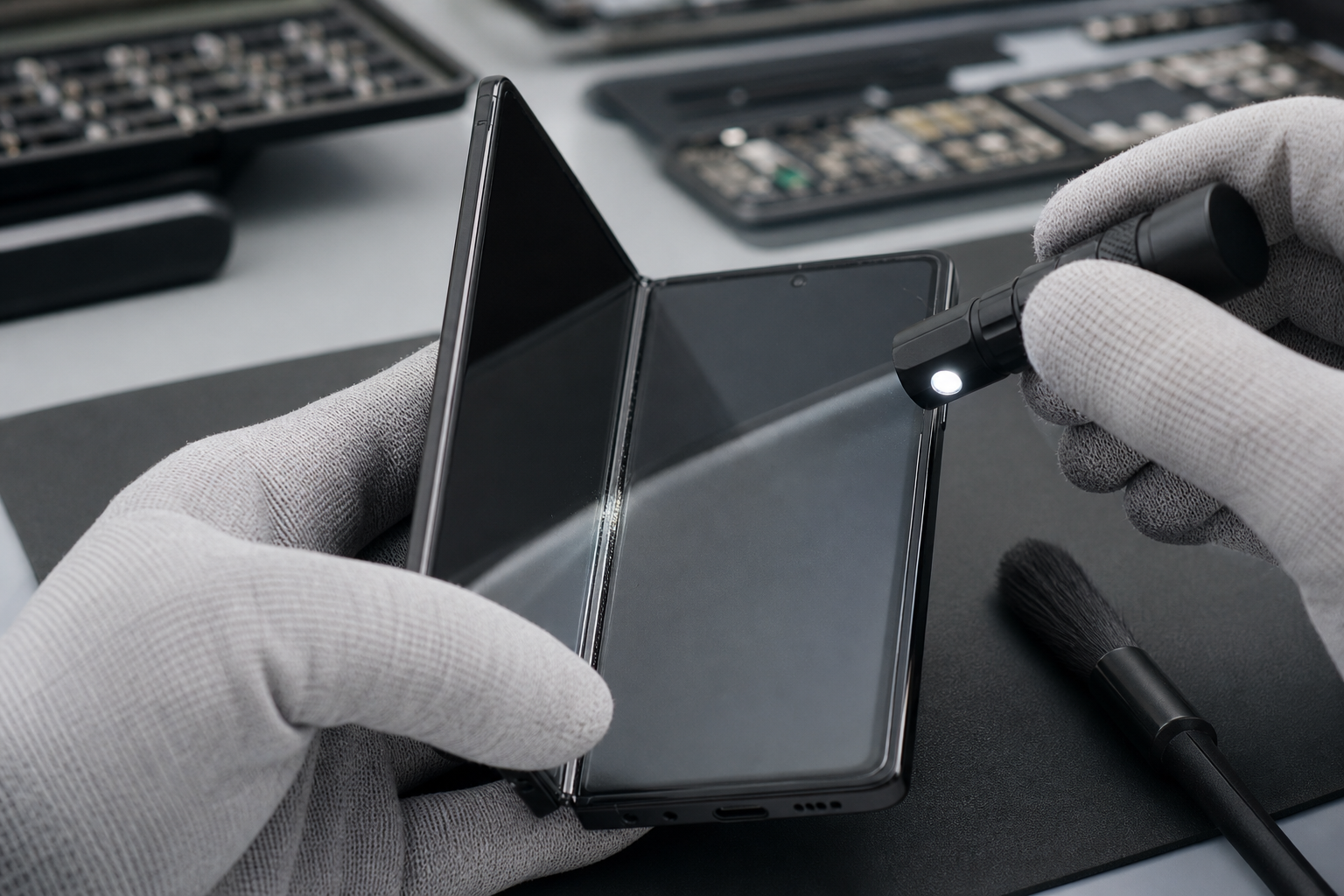
A normal smartphone has one rigid glass display. A foldable phone has a screen that bends repeatedly around a central hinge. The iPhone Duo’s inner display is designed with several protective layers, including a scratch-resistant coating and a nano-textured cover layer, but it should still be treated as more delicate than the outer display. (apple.com)
There are also two separate areas to protect:
- The outer display, which is used when the phone is closed.
- The inner folding display, which opens out for a larger viewing area.
- The hinge, which controls the folding movement and supports the centre of the display.
That means a drop, sharp object or trapped particle can affect more than just the visible glass.
Does the iPhone Duo need a screen protector?
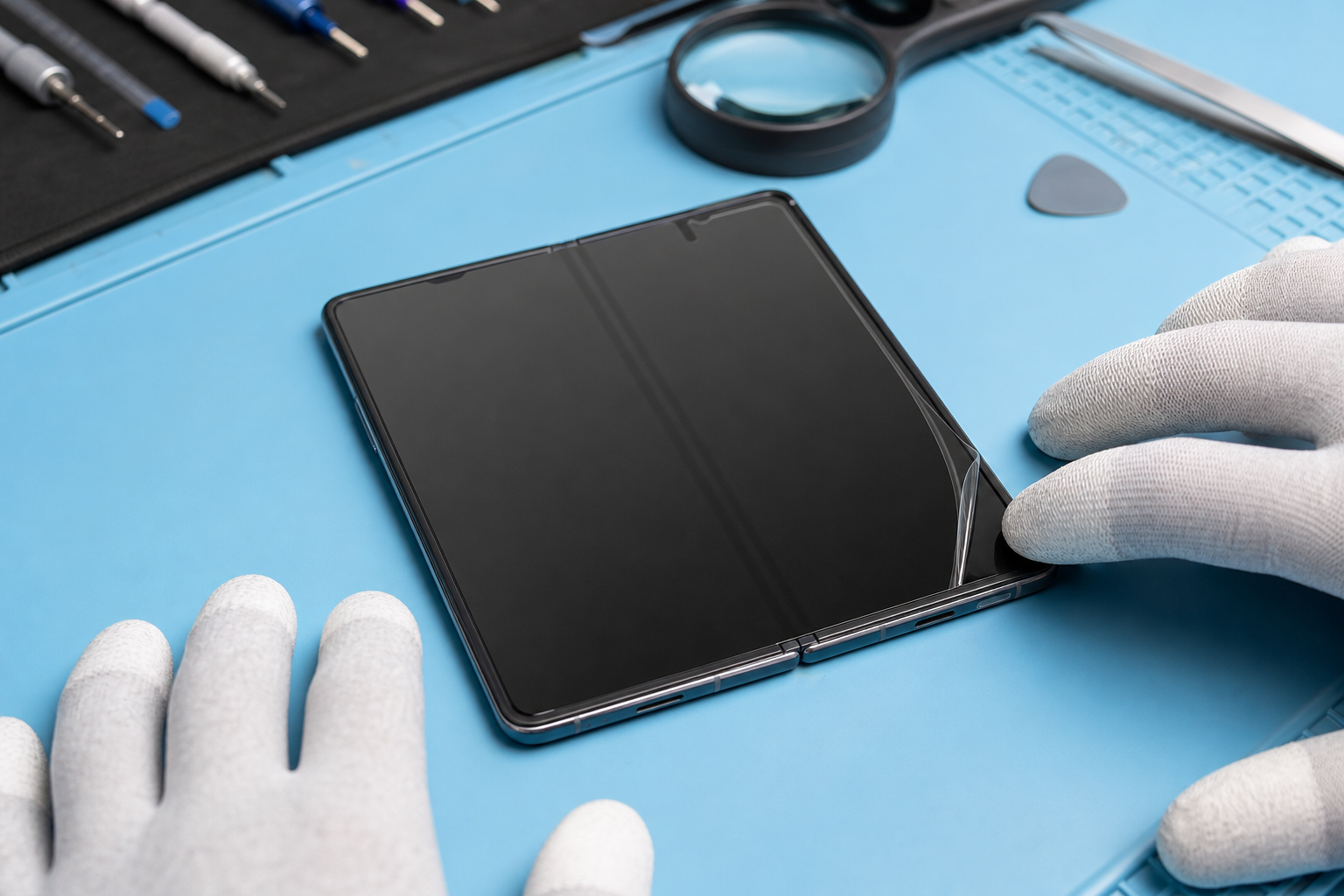
The most important rule is to follow Apple’s own instructions for the iPhone Duo’s built-in display layers. Do not assume that a standard tempered-glass protector designed for a flat iPhone will be suitable for the folding inner screen.
Foldable displays require materials that can flex as the phone opens and closes. On other foldable phones, manufacturers warn owners not to remove the factory-fitted inner protective film or replace it with an unsuitable product. Samsung, for example, advises that removing the main screen film can cause damage or affect touch performance. (samsung.com)
For iPhone Duo owners, sensible protection advice includes:
- Keep any factory-fitted inner protective layer in place unless Apple specifically advises otherwise.
- Never apply a rigid glass protector to the folding display without confirming that it is designed for that exact model.
- Use a compatible protector for the outer display if one is recommended by the manufacturer or a reputable accessory supplier.
- Avoid protectors that lift at the crease, interfere with closing or place pressure along the hinge.
If the inner protector begins to bubble, peel or lift, do not pull it off yourself. A lifted layer can catch dust and may place uneven pressure on the display. Ask Apple or a suitably equipped repair provider for model-specific advice.
Choosing an iPhone Duo case
A case should protect the phone without interfering with its moving parts. Look for a case specifically made for the iPhone Duo rather than adapting a case intended for another foldable model.
Useful features may include:
- Raised protection around the outer display.
- Secure edges that do not become loose when the phone is opened.
- Materials that do not rub aggressively against the hinge.
- A design that allows the phone to open fully and close flat.
- Clear access to cameras, speakers, charging ports and buttons.
Hinge-cover cases can help protect against knocks and scratches, but they are not automatically better in every situation. A poorly fitted hinge cover could trap grit, restrict movement or make it harder to see whether debris has entered the mechanism. Check the case regularly and remove it if it becomes loose, warped or contaminated with sand and dirt.
No case can make a foldable phone drop-proof. The safest approach is to combine a well-fitted case with careful handling, particularly when opening the phone near hard floors or outdoor surfaces.
How to protect the hinge from dust and grit
Dust and fine particles are worth taking seriously. Google’s foldable-phone guidance warns owners to check that there are no objects or fine particles on the display or in the hinge before closing the device. (support.google.com)
To reduce the risk:
- Keep the phone away from loose sand, grit and dusty work areas.
- Check the inner display before folding the phone shut.
- Do not place cards, coins, receipts or other objects between the two halves.
- Avoid putting the phone in a pocket or bag with keys, loose dirt or sharp items.
- Do not force the phone open or closed if the hinge feels rough or obstructed.
If you hear crunching, clicking or scraping when opening the phone, stop folding it repeatedly to test the sound. Continued movement could make a small obstruction worse. Instead, inspect the device in good light and arrange professional advice.
Do not insert a pin, card, paper, cotton bud or compressed-air nozzle into the hinge. These can push debris further inside or damage small components and protective materials.
Safe cleaning for an iPhone Duo
For everyday marks, use a clean, soft, lint-free microfibre cloth. Wipe gently without pressing hard over the crease or hinge area.
Avoid spraying liquid directly onto the phone. Even a device with an IP rating should not be treated as waterproof in every situation. Water resistance can reduce with wear, impact, previous repairs or damaged seals.
Do not use:
- Abrasive cloths or paper towels.
- Household glass cleaner.
- Bleach, solvents or strong chemical products.
- Sharp tools to remove dirt.
- Excessive pressure on the folding display.
If you have been using the phone in a dusty or sandy environment, clean the outside carefully before opening it. This reduces the chance of particles moving onto the inner display or into the hinge.
Warning signs that need attention
Arrange a professional assessment if you notice any of the following:
- The inner display shows lines, black areas, flickering or unusual colours.
- Touch response becomes unreliable near the crease.
- The screen protector lifts, bubbles or separates at the fold.
- The phone no longer opens or closes smoothly.
- The hinge makes a new grinding, cracking or scraping sound.
- The two halves no longer align correctly when closed.
- A drop has caused a dent, frame distortion or visible screen damage.
- The phone has been exposed to liquid or fine debris.
Back up your data before handing over any device for assessment, where possible. Avoid repeatedly opening and closing a damaged foldable phone, as this may increase the affected area.
Is a foldable iPhone worth the premium?
That depends on how you use your phone. The iPhone Duo’s larger inner display could be useful for reading, multitasking, video, gaming and viewing documents, while the outer display is intended for more compact use when the phone is closed.
However, foldable ownership involves more attention to cases, screen layers and hinge cleanliness than many people are used to. The launch price in the UK starts at £1,999 according to Apple, so protecting the device from avoidable damage is particularly important. (apple.com)
Before buying, consider whether you are comfortable with:
- Using model-specific accessories.
- Keeping objects and grit away from the hinge.
- Following display-care instructions closely.
- Seeking advice rather than removing a lifting inner protector yourself.
- Checking repair options and likely coverage before a problem occurs.
If you already own an iPhone Duo and are concerned about its screen, hinge or charging performance, visit Fonebook Horden for local phone and device repair information. Fonebook is based at Unit 5 Cotsford Lane, Horden, SR8 4JJ. You can also visit the Fonebook home page for current repair information, online booking and repair tracking. Repair availability and pricing can vary by model and fault, so check the live repair details before booking. Warranty on fitted parts — terms apply.
Frequently asked questions
Can I use a normal glass screen protector on the iPhone Duo inner display?
Do not assume that a standard rigid glass protector is suitable for the folding display. Use only a product confirmed as compatible with the exact model, and follow Apple’s instructions for any factory-fitted protective layer.
What should I do if dust gets into the iPhone Duo hinge?
Do not insert tools, cards or cotton buds into the hinge, and do not force the phone open or closed. Stop using the folding mechanism if it feels rough and arrange professional advice.
Can I remove a bubbling inner screen protector myself?
It is safer not to remove or replace an inner foldable-screen protector yourself. Contact Apple or a repair provider with suitable model-specific equipment for advice.
Is the iPhone Duo waterproof?
Apple lists the iPhone Duo as IP68 water- and dust-resistant, but this does not make it waterproof in every situation. Resistance can reduce after wear, impact or repair, so avoid unnecessary liquid exposure.
What does a grinding sound from the hinge mean?
A new grinding, scraping or cracking sound may indicate debris, damage or a hinge problem. Avoid repeatedly folding the phone to test it and arrange a professional assessment.